Blog Article
Read Coco Coir Blog Articles
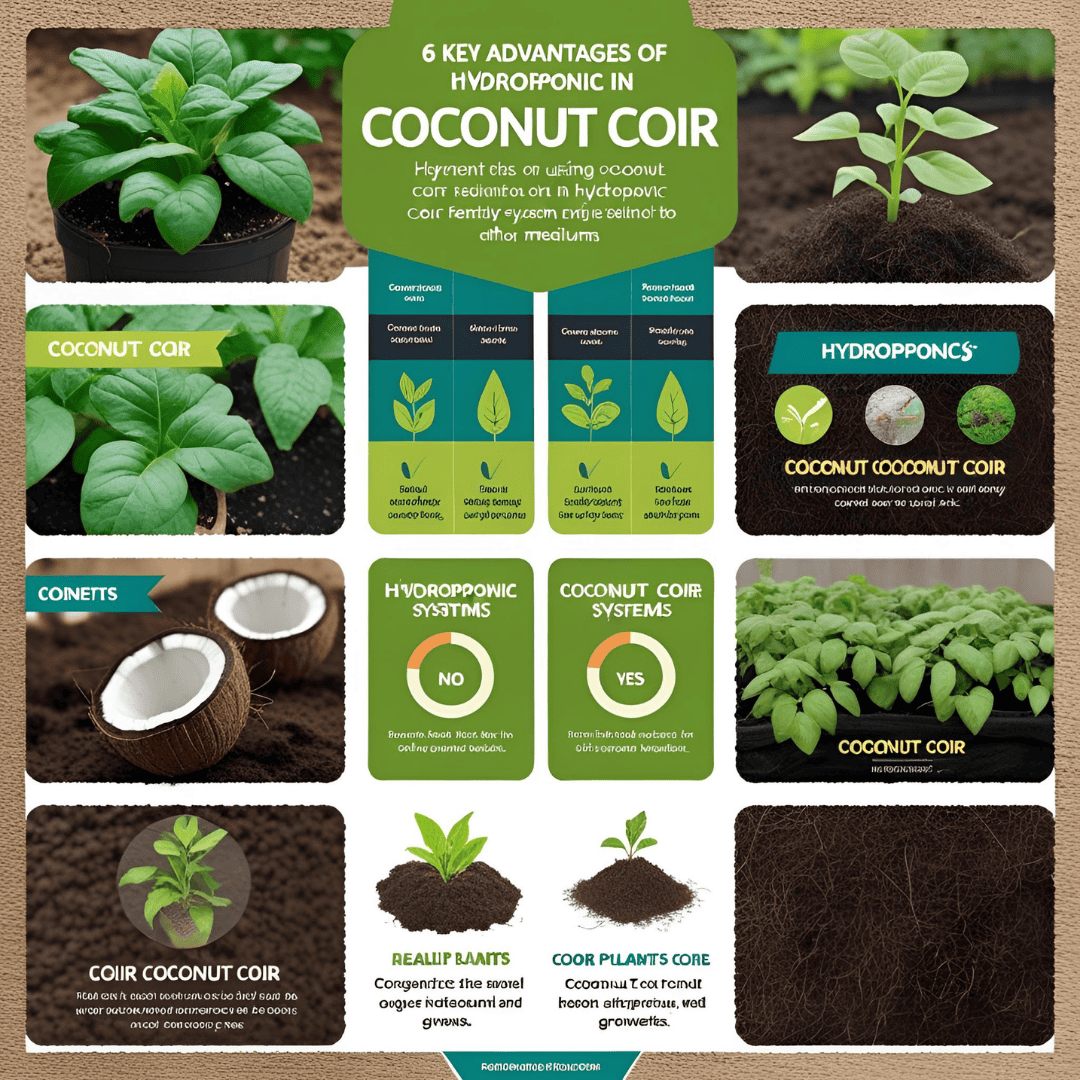
6 Game‑Changing Benefits of Coconut Coir Hydroponics
POSTED ON: June 22, 2025
Coconut coir for hydroponics is rapidly becoming the medium of choice among U.S. growers because it delivers superior aeration, moisture retention, and eco‑friendly credentials. Moreover, this fibrous substrate derived from coconut husks outperforms peat and rockwool in sustainability, therefore helping cultivators reduce their carbon footprint while boosting yields.
Table of Contents
- Why Coconut Coir for Hydroponics?
- 6 Game‑Changing Benefits of Coconut Coir for Hydroponics
- The Science Behind Coconut Coir for Hydroponics
- Step‑by‑Step Setup Guide
- Common Mistakes to Avoid
- Buying Guide: Choosing Quality Coconut Coir
- FAQs
- Conclusion
Why Coconut Coir for Hydroponics?
Because coconut palms shed husks year‑round, coconut coir for hydroponics represents a truly renewable resource. In addition, compressed bricks expand eightfold, minimizing freight emissions. Therefore, growers who adopt coir align with state‑level ESG initiatives and capture eco‑conscious consumers.
6 Game‑Changing Benefits of Coconut Coir for Hydroponics
1. Coconut Coir for Hydroponics Maximizes Root Oxygenation
The chunky fibers weave countless air pockets that support high dissolved oxygen. Consequently, Cornell trials recorded 25 % longer root hairs versus perlite.
2. Coconut Coir for Hydroponics Stabilizes Moisture
Each gram absorbs nine grams of water yet drains excess swiftly. Moreover, uniform capillary action keeps EC stable across slabs.
3. Coconut Coir for Hydroponics Balances pH Naturally
Premium coir registers pH 5.7–6.5, dovetailing with nutrient uptake curves. Therefore, pH‑down adjustments decline.
4. Coconut Coir for Hydroponics Buffers Nutrients
A cation exchange capacity near 60 meq/100 g stores calcium and magnesium, releasing them gradually. Consequently, deficiency events plummet.
5. Coconut Coir for Hydroponics Resists Pathogens
Heat‑pasteurized coir is sterile, clean and organic. Naturally resistant to pathogens.
6. Coconut Coir for Hydroponics Cuts Carbon Emissions
Switching from peat to coir can slash greenhouse‑media CO₂ by up to 70 %, according to Nature Climate Change.
The Science Behind Coconut Coir for Hydroponics
Coconut coir consists of roughly 45 % lignin and 44 % cellulose. Lignin grants durability, while cellulose provides structural resilience. Moreover, the negative surface charge attracts ammonium and potassium ions, hence forming a nutrient reservoir that sustains plants between irrigations.
Step‑by‑Step Setup Guide
Step 1 – Hydrate Coconut Coir Bricks
Place bricks in a tote, add warm water slowly, and allow expansion. Moreover, break apart clumps for uniform texture.
Step 2 – Buffer Your Coco Coir for Hydroponics
Soak the hydrated medium in a crop specific nutrient solution.
Step 3 – Transplant Seedlings
Insert seedlings or transplants.
Step 4 – Monitor EC and pH
Measure runoff weekly. Adjust feed EC and monitor pH levels.
Common Mistakes to Avoid
- Skipping buffering
- Over‑compaction
- Neglecting runoff management
- Using low‑grade coir
- Under‑irrigating in high VPD
Buying Guide: Choosing Quality Coconut Coir
Seek EC < 0.5 mS cm⁻¹, pH 5.7–6.5, OMRI or RHP certification, and particle blends of 70 % pith / 30 % fiber. Moreover, insist on lab certificates and UV‑stabilized packaging. Reputable suppliers such as Riococo provide washed, buffered options that ship nationwide within 48 hours.
FAQs
1. Does coconut coir need special nutrients?
Use crop specific formulas richer in Ca and Mg.
2. Is coconut coir better than stone wool?
Coir is renewable and biodegradable, whereas stone wool disposal is costly.
3. Where can I buy premium coconut coir?
Riococo supplies OMRI‑listed premium coco coir.
Conclusion
Ultimately, coconut coir for hydroponics offers sustainable, high‑performance cultivation. Moreover, by implementing the tactics above, you can maximize yields while protecting the planet. Therefore, explore Riococo’s premium coir line today.
External references: Coir – Wikipedia; Nature Climate Change; Cornell CALS